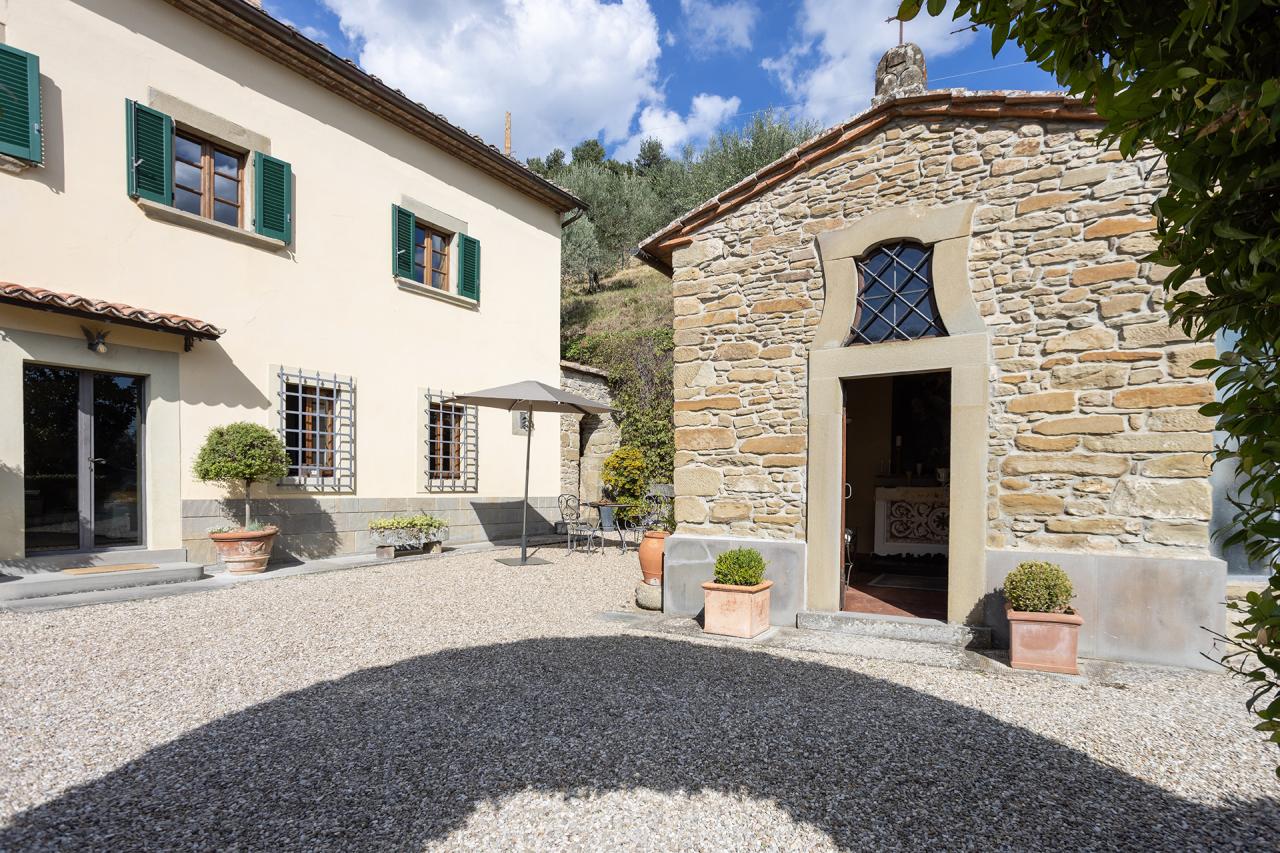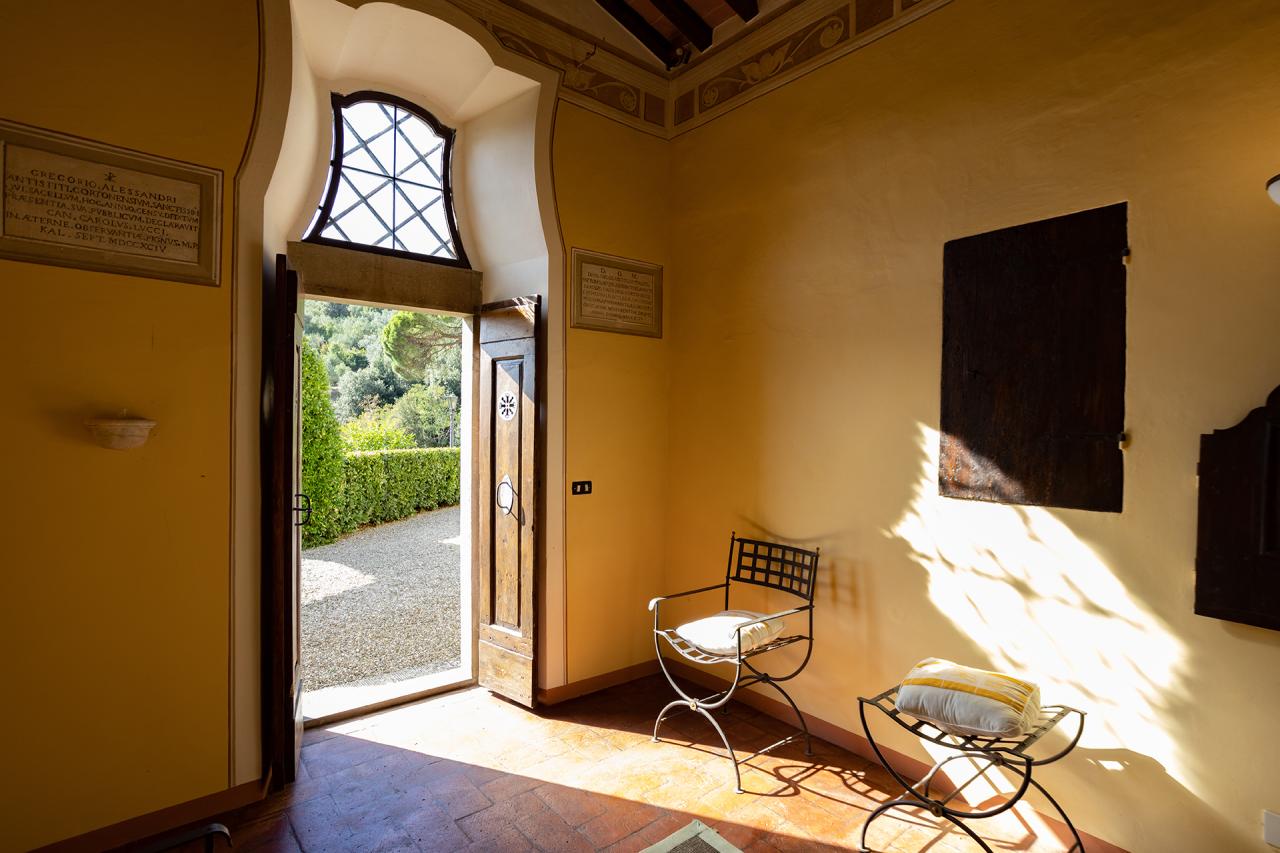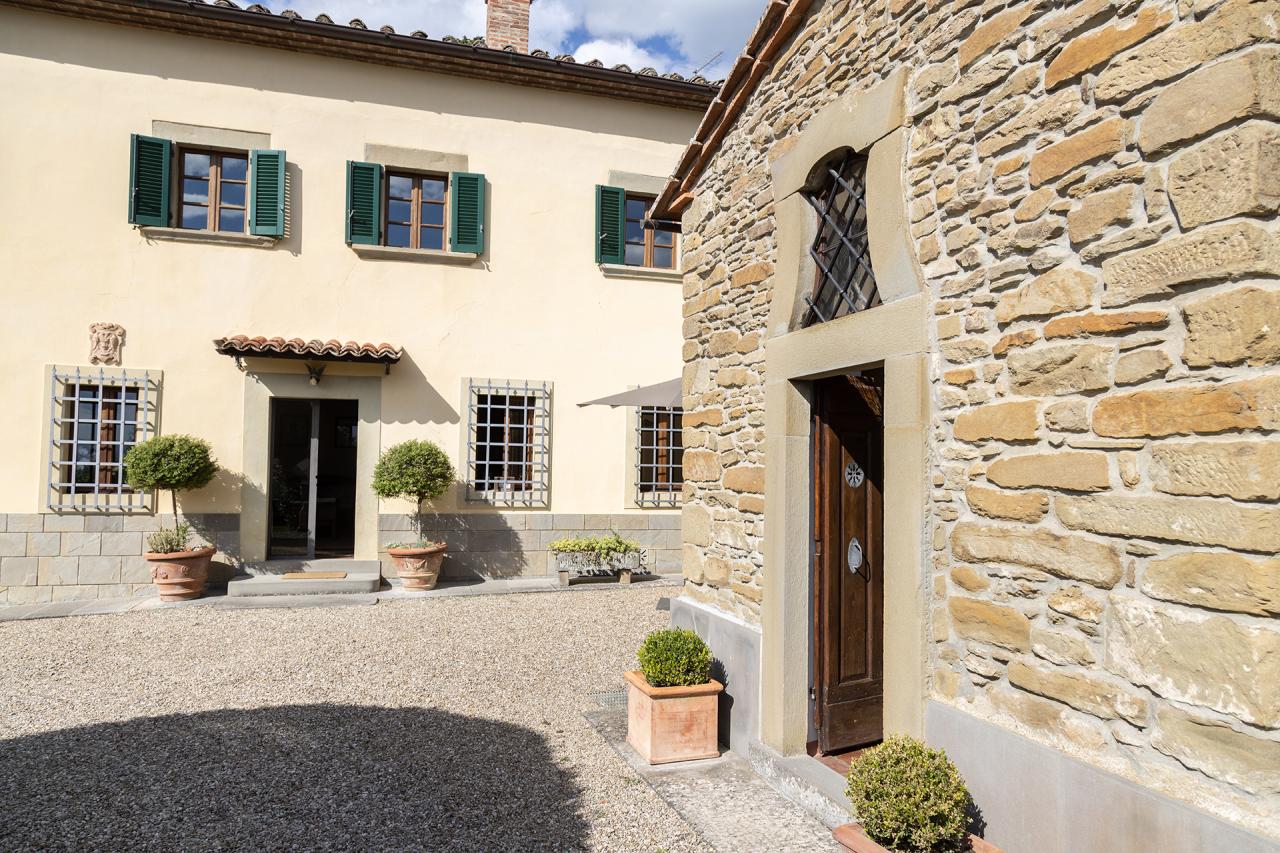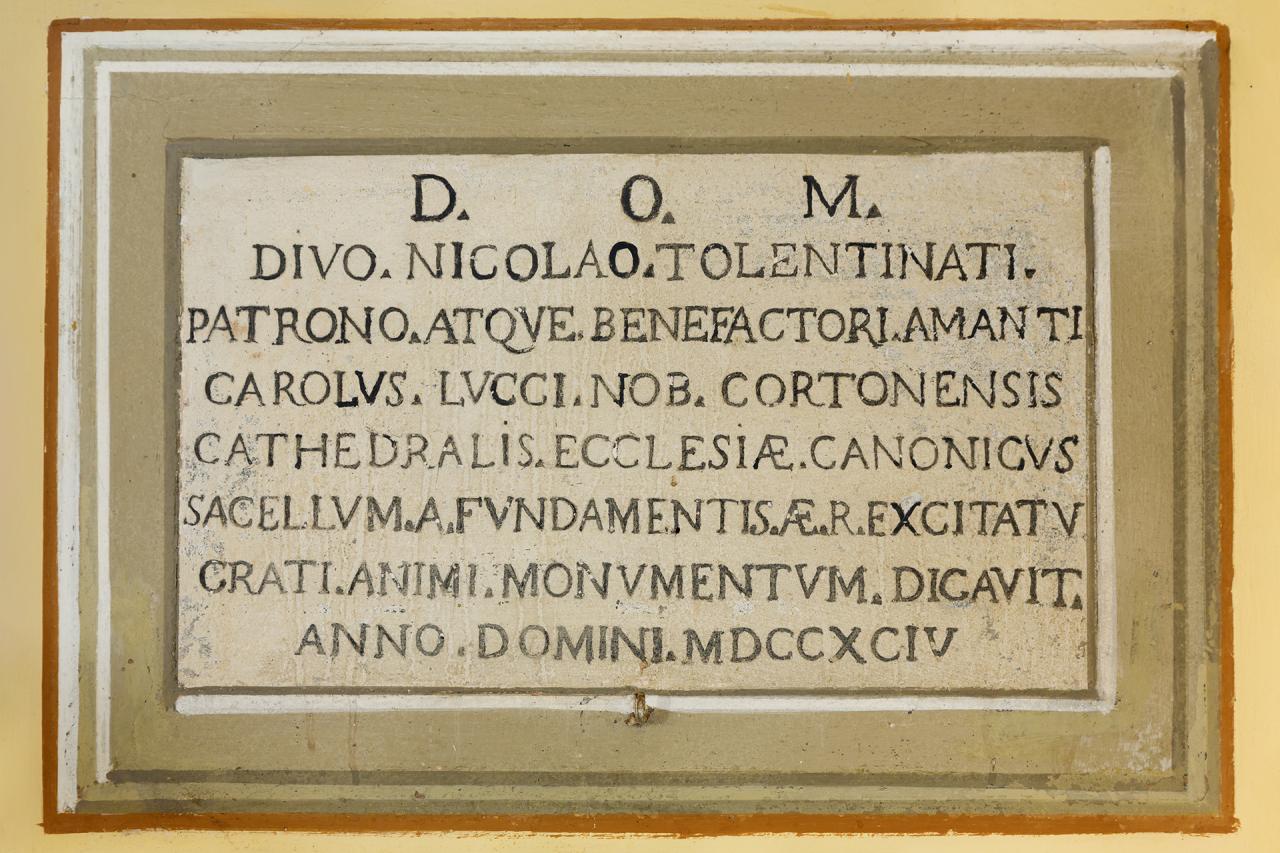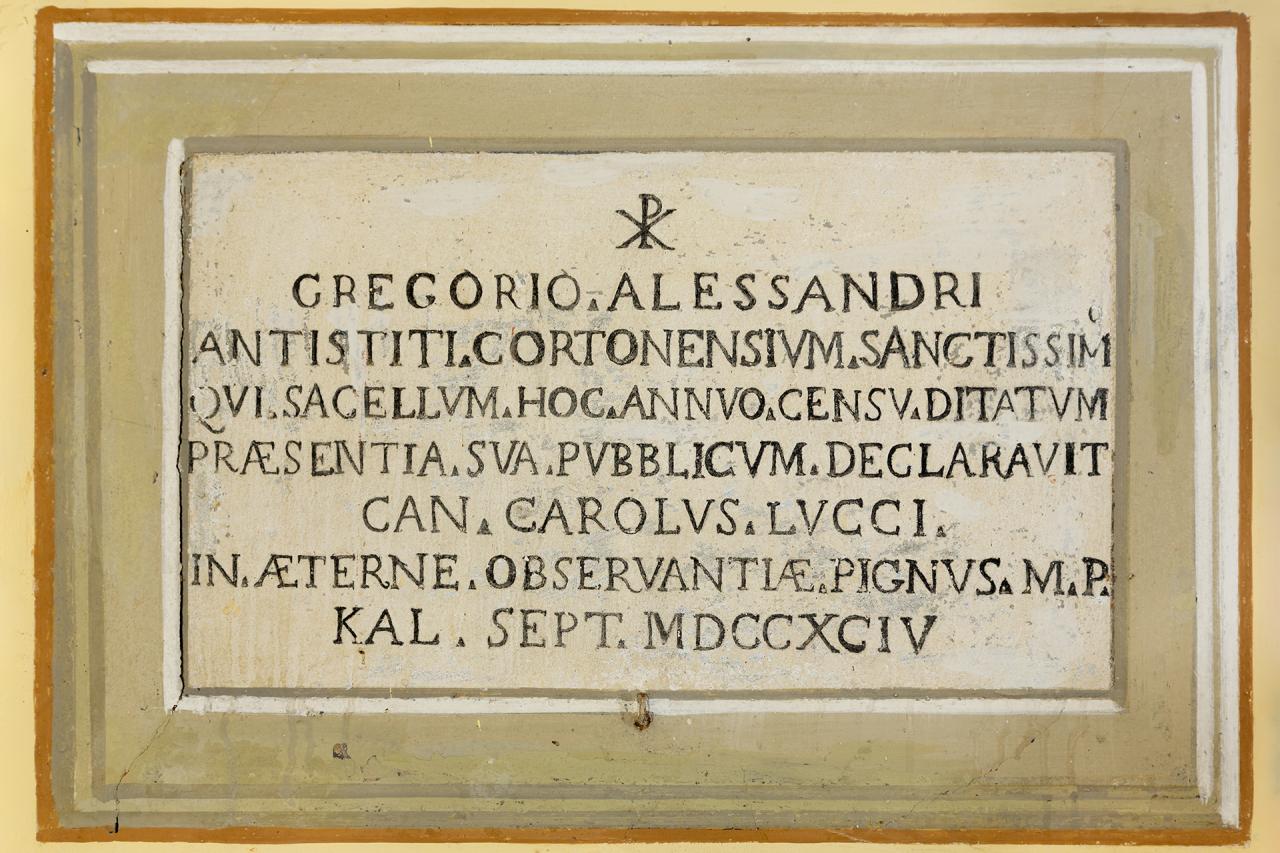
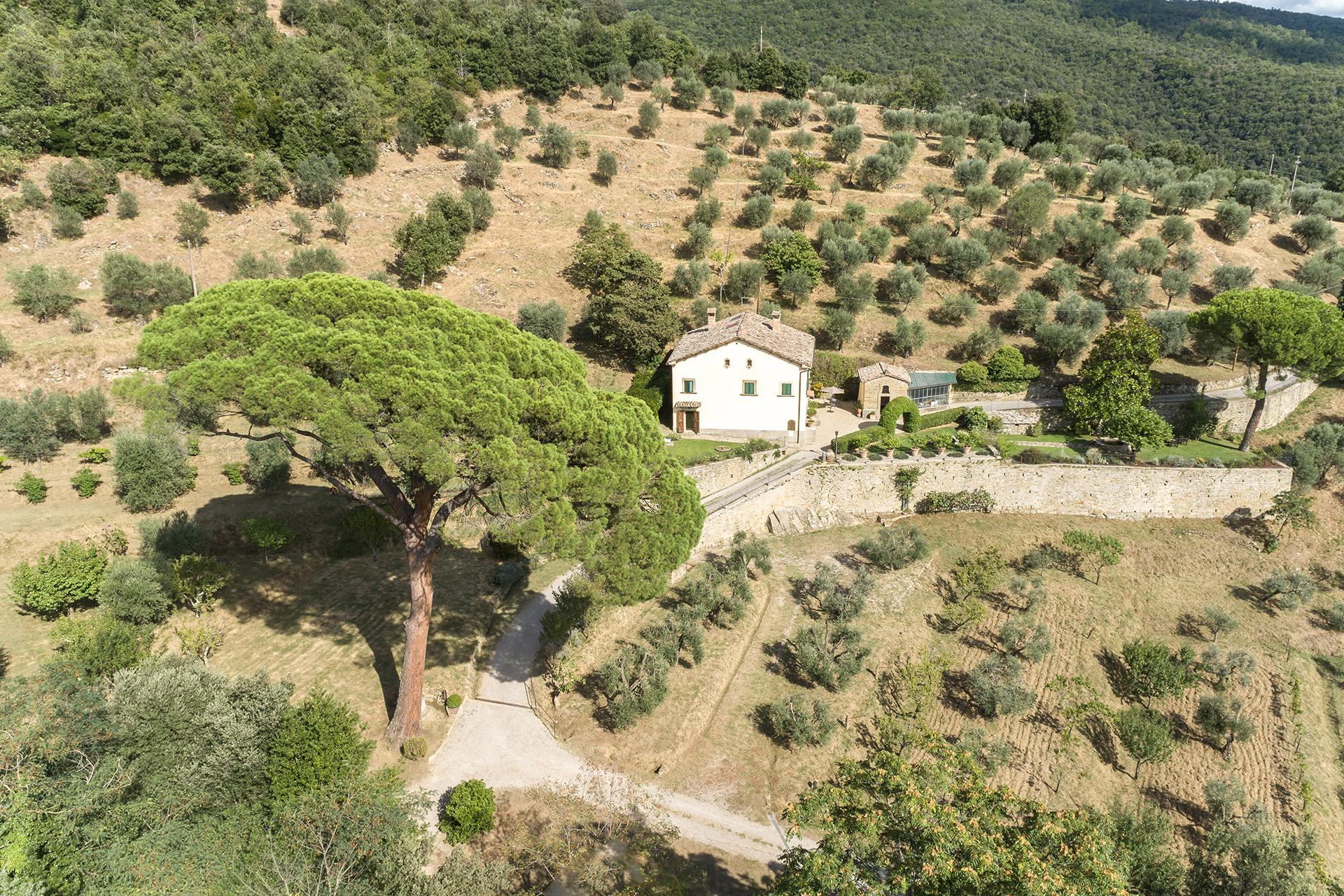
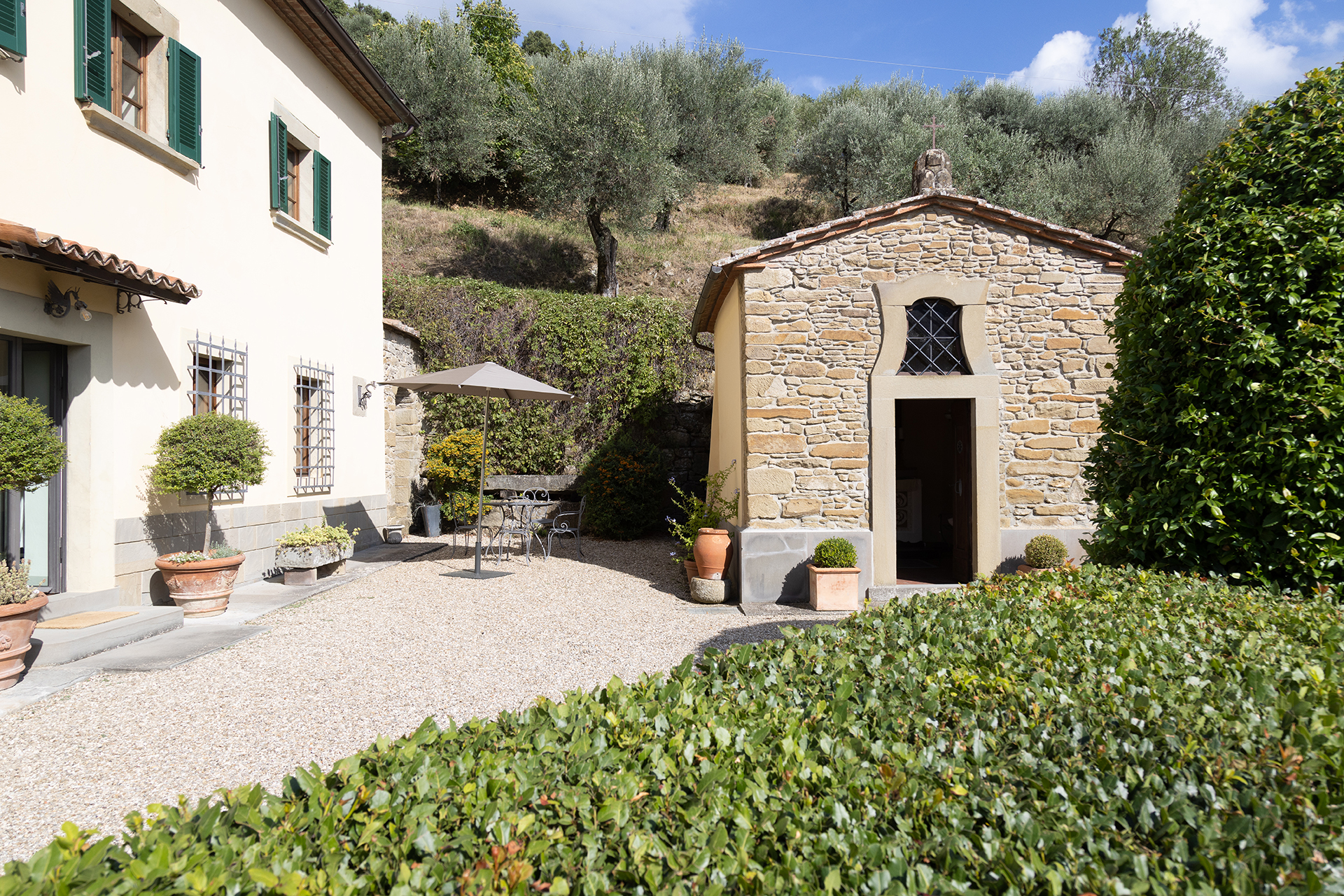
The Noble Chapel di San Nicola da Tolentino was built by Carlo Lucci, the former owner of what is now Villa Sabatini in Teccognano di Cortona, born in 1753 from the marriage between the Cortona nobleman Cristofano Lucci and Eugenia di Flaminio Saracini.
Carlo Lucci, the fourth son, as was often the case with cadet sons, embraced an ecclesiastical career, becoming a canon in 1782 and holding this position until his death. On the civil side, he is remembered as an associate of the Accademia Etrusca of Cortona, the city's most prestigious cultural institute. Not much information is known about him, and in particular the reasons for his devotion to St. Nicholas of Tolentino remain obscure: certainly heartfelt, if it prompted him to build a chapel ex novo in honour of the saint, but singular and without comparisons in Cortona.
The construction of the chapel must have taken place as part of a more comprehensive redevelopment of the main building around 1808.
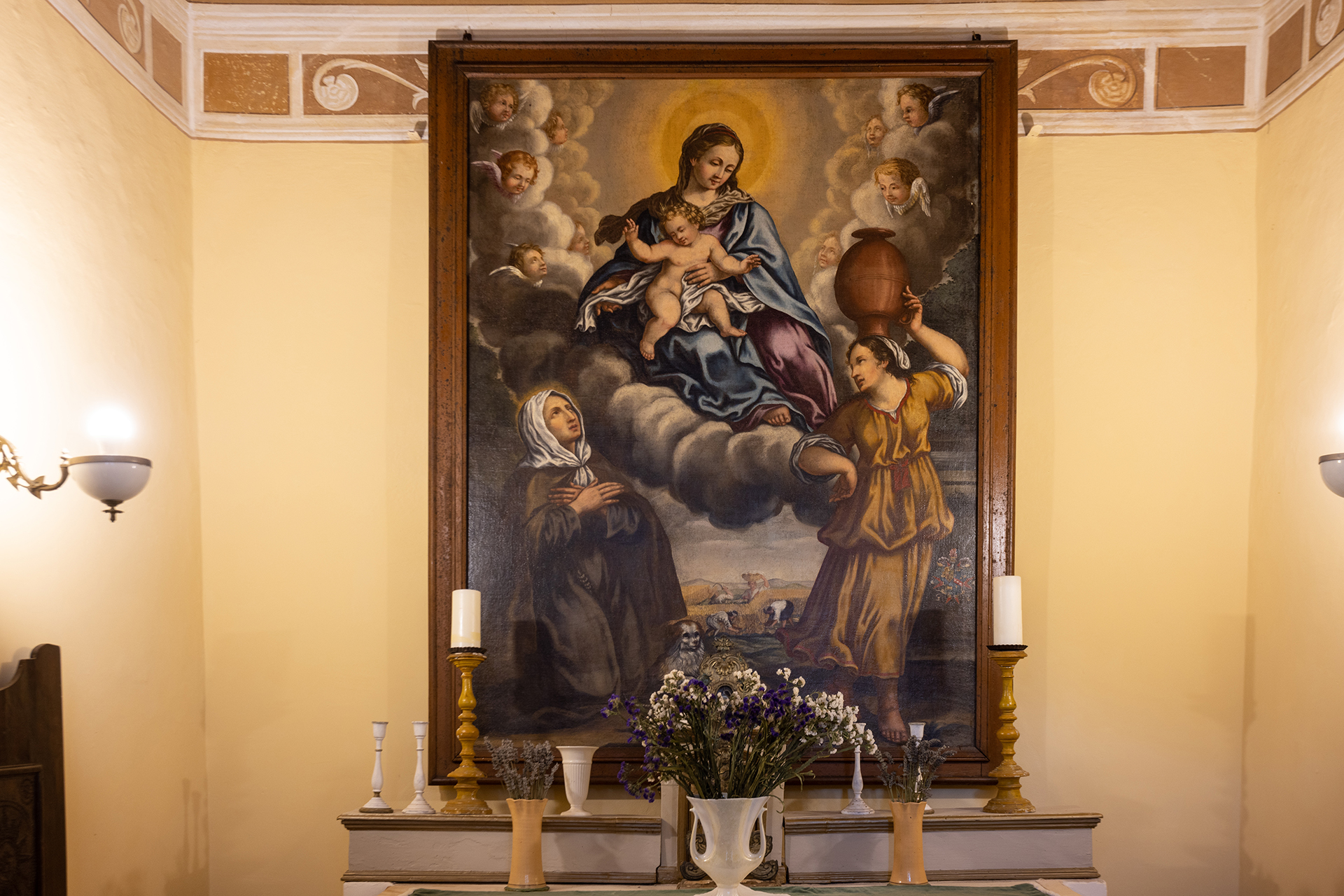
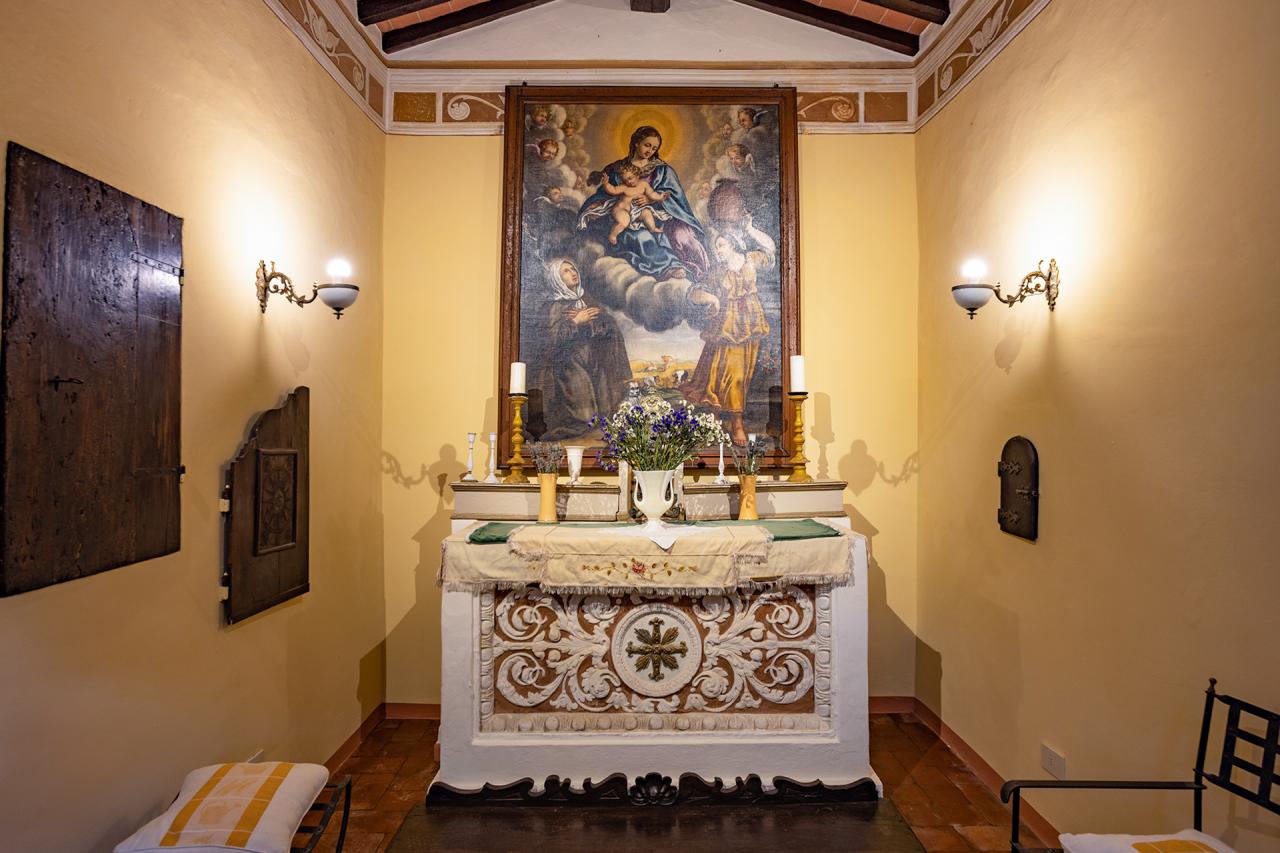
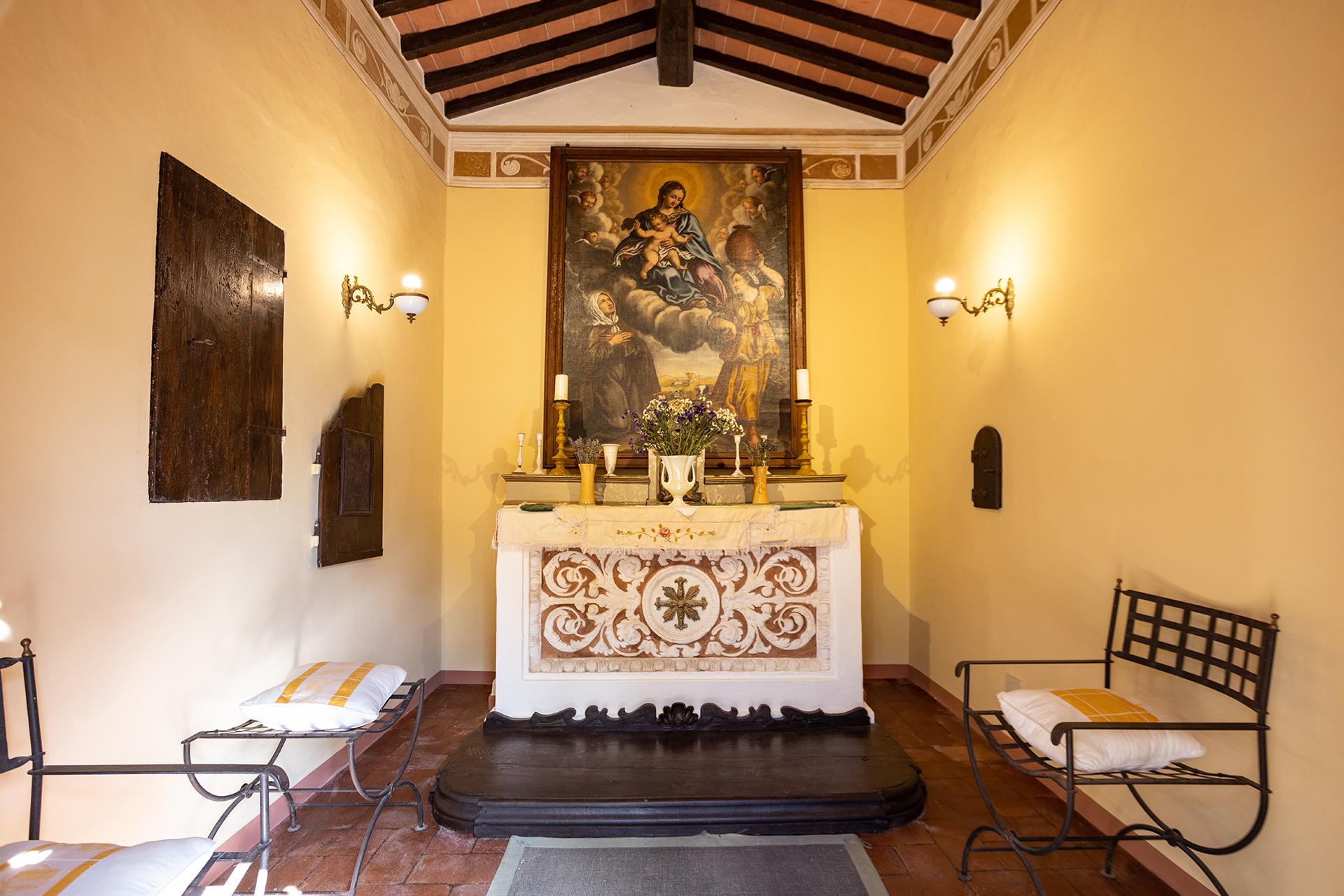
In the painting, set in a summery, country landscape, the three figures depicted - Saint Margaret on the left and the young peasant girl on the right, both facing the Madonna, who instead occupies a central position - are clearly recognisable as having been executed by the artist according to their respective canons.
Adriano Zabarelli, the painter who created and signed the painting on the lower right, wanted to create an authentic and in some respects enigmatic composition. The beautiful single-handled amphora carried on the head by the young peasant girl does not rest on the bottom, but on the mouth, without the water it contains spilling outside.
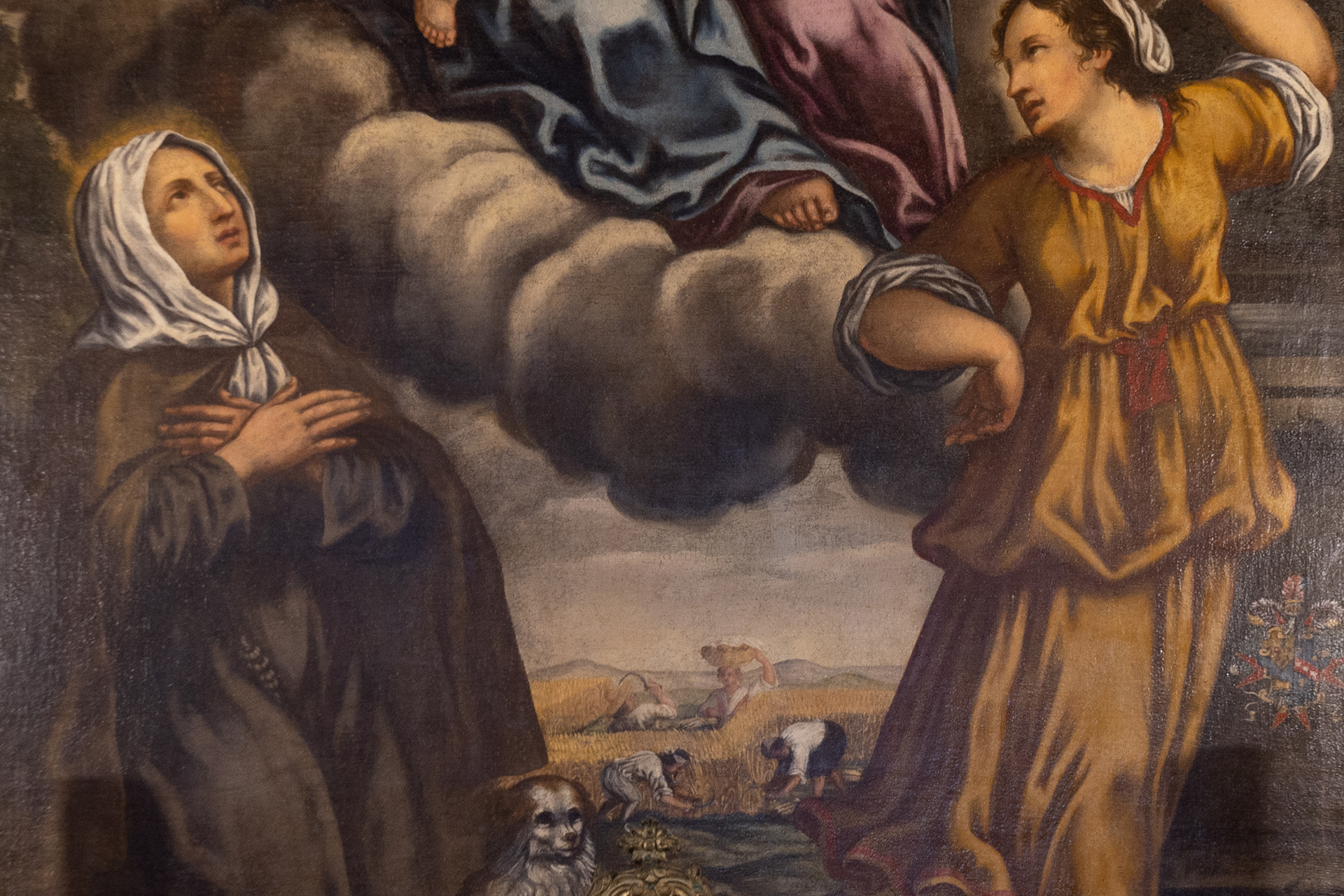
The episode depicted is, in fact, the miracle of Castel Rigone - a hamlet in the municipality of Passignano, about 30 km from Cortona - following which the Sanctuary of Maria Santissima dei Miracoli di Castel Rigone was built between the end of the 15th century and 1532.
In the painting, probably dating from the late 1760s, the Madonna in Glory, in the centre, and Saint Margaret, on the left, clearly reveal their dependence on two models by the celebrated painter Pietro da Cortona, both of whom were easily accessible and studied by our Adriano Zabarelli.
As for the provenance of the painting, its dating excludes that it was made for the chapel. The painting, which has no connection with St. Nicholas of Tolentino, after whom the chapel is named, was placed on the altar either by Carlo Lucci, taking it from his own picture gallery or from the market, or by one of the later owners.

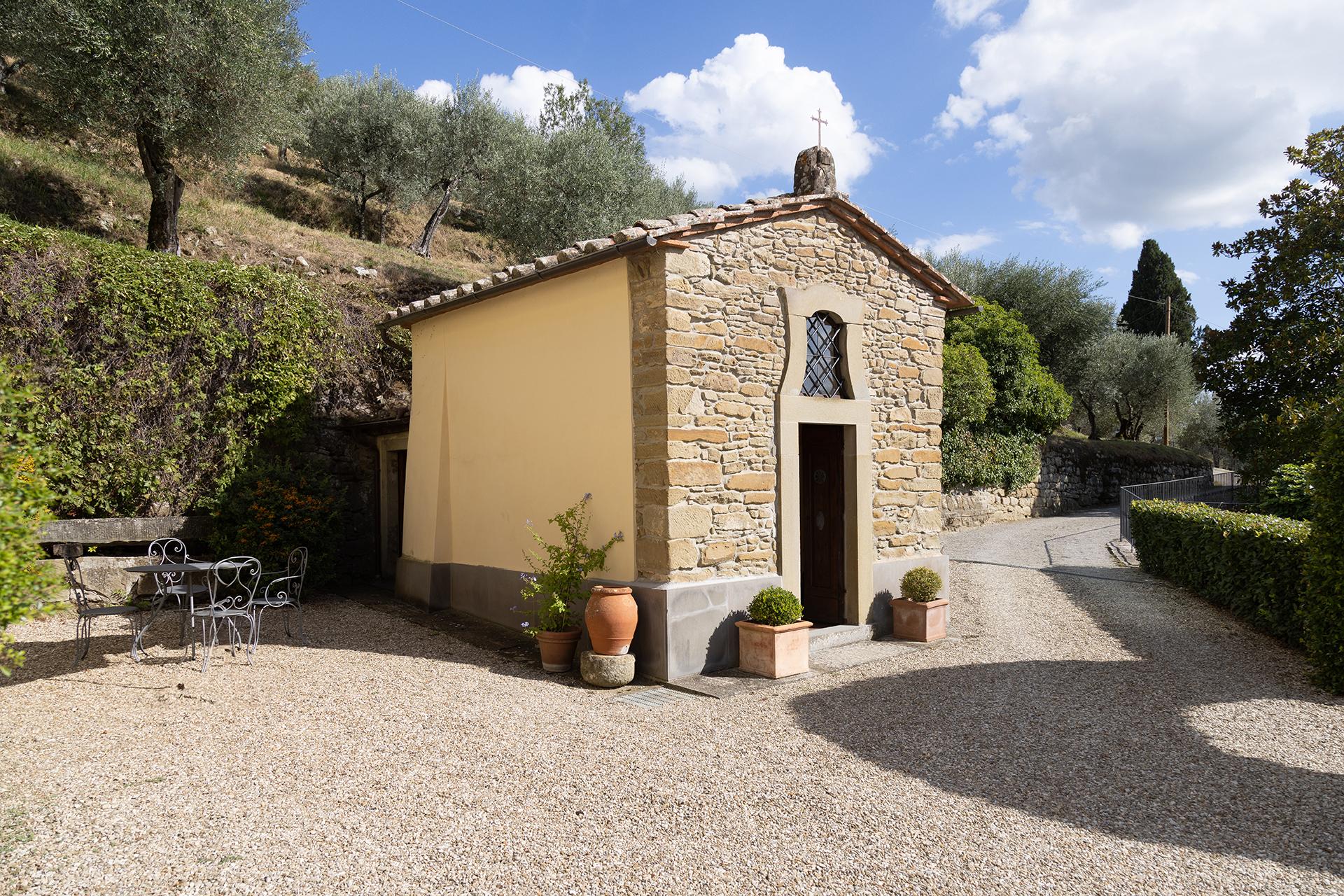
The Chapel of St Nicholas of Tolentino is located within the current Villa Sabatini property, in the heart of the Tuscan countryside, on the hillsides of the ancient Etruscan city of Cortona. It was built by Carlo Lucci (1753-1813), canon and nobleman of Cortona, as a demonstration of his deep devotion to the Saint.
After his death, the villa passed to a series of priestly heirs and then to Francesco Berti, who in 1830 appeared as the sole owner of the villa and chapel in the registers of the newly activated Tuscan land register. In 1910, Domenico Sabatini acquired the villa, which is now owned by Filippo Sabatini, who currently lives in the villa.
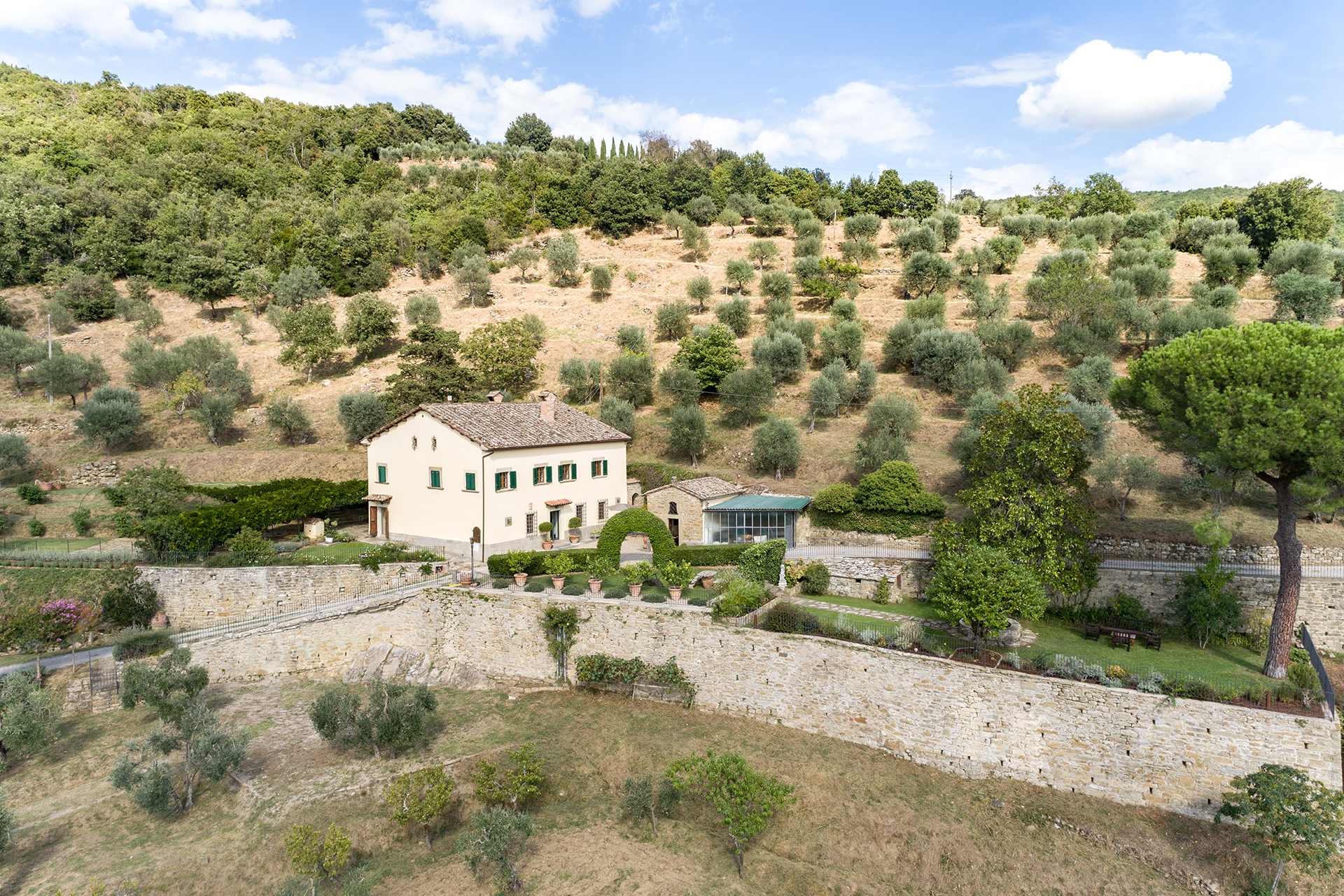
The chapel is located in Teccognano di Cortona, inside the park of Villa Sabatini. You can reach it from the A1 motorway by exiting at the Valdichiana tollbooth and continuing on the Bettolle-Perugia link road (towards Perugia) until the Castiglione del Lago exit.
From here, continue towards Terontola-Cortona until the junction on the right for Ossaia-Cortona. After 2 km from the village of Ossaia, at the stop sign, turn right towards Pergo and after 700 meters turn left following the sign for the Church of San Michele Arcangelo. Proceed following the signs for Teccognano, driving along a small winding road for 2 km.
For those with a satellite navigator, the GPS coordinates to reach us are:
The Chapel of San Nicola da Tolentino can be visited by appointment only. Please request an appointment by calling +39 335 6043210 or by emailing filippo.sabatini.62@gmail.com. You must wait for confirmation of your appointment before coming to the Villa.

Progetto realizzato grazie al contributo "PNNR - M1C3 Ivestimento 2.2: Protezione e valorizzazione dell'architettura e dal paesaggio rurale" RESTAURO CONSERVATIVO DELLA CHIESA DI SAN NICOLA DA TOLENTINO - CUP D77B22000430004